Featured Publications
Book Chapter
- Lie, K.-A., & Møyner, O. (2021). Advanced modelling with the MATLAB reservoir simulation toolbox.
2022
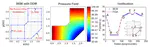
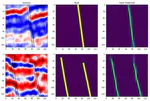
- Zhou, X., Yin, Q., & Wang, B. (2022). Automatic Fault Segmentation Using Wavelet Convolutional Neural Networks. Day 3 Thu, March 24, 2022, D031S031R006. [DOI]
- Wang, B., Feng, Y., Zhou, X., Pieraccini, S., Scialò, S., & Fidelibus, C. (2022). Discontinuous boundary elements for steady-state fluid flow problems in discrete fracture networks. Advances in Water Resources, 161, 104125. https://doi.org/10.1016/j.advwatres.2022.104125
- Wang, B., Wald, I., Morrical, N., Usher, W., Mu, L., Thompson, K., & Hughes, R. (2022). An GPU-accelerated particle tracking method for Eulerian–Lagrangian simulations using hardware ray tracing cores. Computer Physics Communications, 271, 108221. https://doi.org/10.1016/j.cpc.2021.108221
2021
- Wang, B., & Fidelibus, C. (2021). An Open-Source Code for Fluid Flow Simulations in Unconventional Fractured Reservoirs. Geosciences, 11(2), 106. https://doi.org/10.3390/geosciences11020106
- Demidov, D., Mu, L., & Wang, B. (2021). Accelerating linear solvers for Stokes problems with C++ metaprogramming. Journal of Computational Science, 49, 101285. https://doi.org/10.1016/j.jocs.2020.101285
- Wang, B., Feng, Y., Blears, J., Thompson, K., & Hughes, R. (2021). Streamline-based simulation of nanoparticle transport in field-scale heterogeneous subsurface systems. Advances in Water Resources, 148, 103842. https://doi.org/10.1016/j.advwatres.2020.103842
- Yang, B., Wang, H., Shen, Z., Olorode, O., Wang, B., Zheng, Y., Yan, W., & Jia, Z. (2021). Full-Sample X-ray Microcomputed Tomography Analysis of Supercritical CO 2 Fracturing in Tight Sandstone: Effect of Stress on Fracture Dynamics. Energy & Fuels, 35(2), 1308–1321. https://doi.org/10.1021/acs.energyfuels.0c03554
- Yang, B., Wang, H., Wang, B., Shen, Z., Zheng, Y., Jia, Z., & Yan, W. (2021). Digital quantification of fracture in full-scale rock using micro-CT images: A fracturing experiment with N2 and CO2. Journal of Petroleum Science and Engineering, 196, 107682. https://doi.org/10.1016/j.petrol.2020.107682
- Wang, B., Mu, L.,(2021). Viscosity robust weak Galerkin finite element methods for Stokes problems. Electronic Research Archive, 29(1), 1881–1895. https://doi.org/10.3934/era.2020096
2020
- Ning, X., Feng, Y., & Wang, B. (2020). Numerical simulation of channel fracturing technology in developing shale gas reservoirs. Journal of Natural Gas Science and Engineering, 83, 103515. https://doi.org/10.1016/j.jngse.2020.103515
- Olorode, O., Wang, B., & Rashid, H. U. (2020). Three-Dimensional Projection-Based Embedded Discrete-Fracture Model for Compositional Simulation of Fractured Reservoirs. SPE Journal, 25(04), 2143–2161. https://doi.org/10.2118/201243-PA
- Feng, Y., Shi, E., Luo, Y., Wang, B., Zhang, L., & Zhao, Y. (2020). Implementation of streamline simulation based on finite element method in FEniCS. Computational Geosciences, 24(1), 333–347. https://doi.org/10.1007/s10596-019-09923-7
2017-2019
- Wang, B., Feng, Y., Pieraccini, S., Scialò, S., & Fidelibus, C. (2019). Iterative coupling algorithms for large multidomain problems with the boundary element method: Iterative coupling algorithms for Boundary Element Method. International Journal for Numerical Methods in Engineering, 117(1), 1–14. https://doi.org/10.1002/nme.5943
- Wang, B., Feng, Y., Du, J., Wang, Y., Wang, S., & Yang, R. (2018). An Embedded Grid-Free Approach for Near-Wellbore Streamline Simulation. SPE Journal, 23(02), 567–588. https://doi.org/10.2118/182614-PA
- Wang, B., Li, G., Huang, Z., Ma, T., Zheng, D., & Li, K. (2017). Lab Testing and Finite Element Method Simulation of Hole Deflector Performance for Radial Jet Drilling. Journal of Energy Resources Technology, 139(3), 03296. https://doi.org/10.1115/1.4035552